
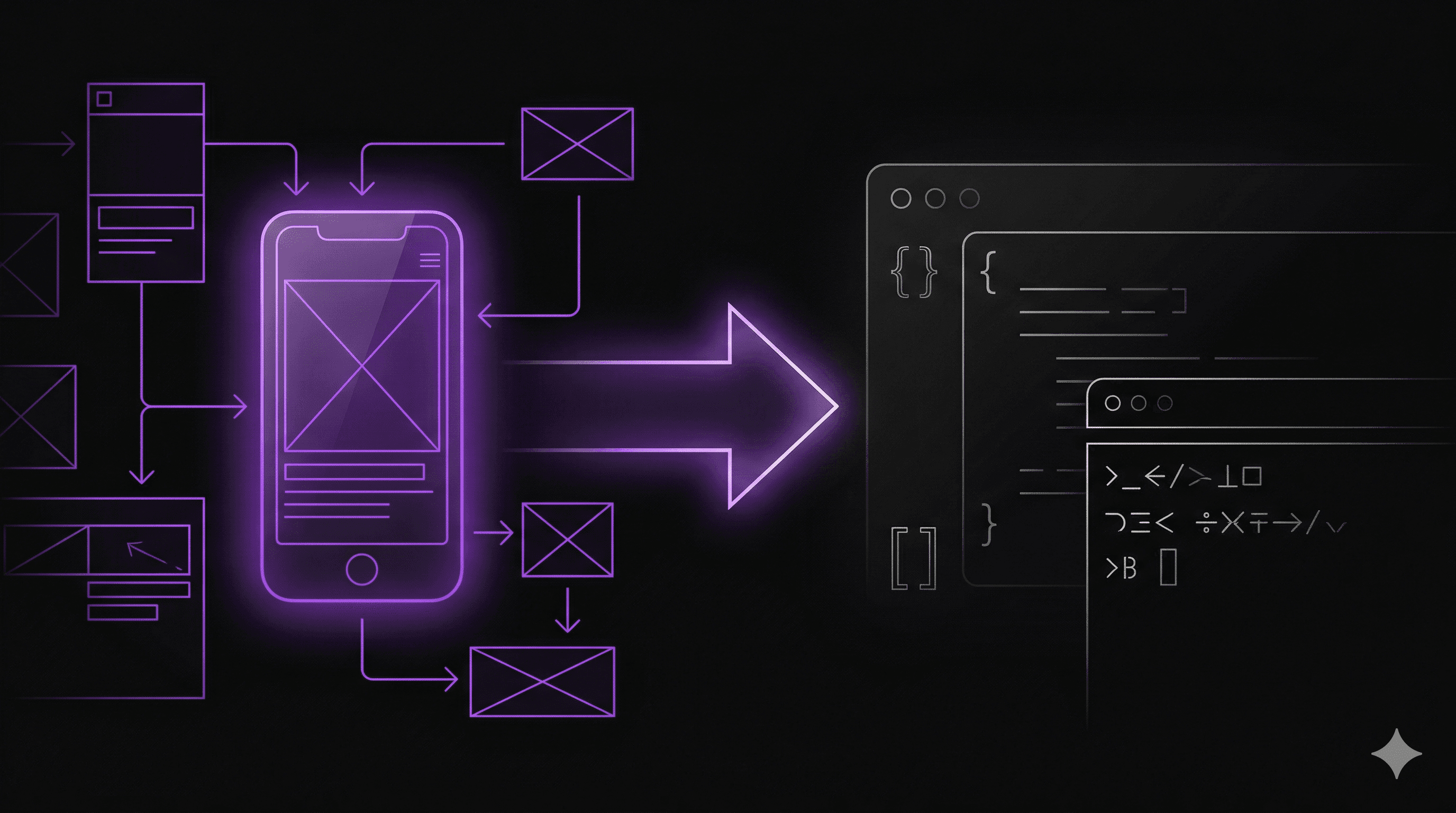
the expensive mistake most startups make
here's a story we've heard more than fifty times.
a founder has a great idea. they hire a developer. nine months and $80,000 later, they have a product. they show it to users. users are confused. the flow doesn't make sense. the wrong features were built. the core use case was misunderstood from the start.
so they rebuild. another six months. another $50,000.
this isn't bad luck. it's a predictable outcome of a broken process.
what goes wrong
when you code before you design, you're making hundreds of product decisions in a vacuum. every if statement is a UX decision. every database schema is a product decision. every API endpoint reflects an assumption about how users will behave.
the problem isn't the code. it's that those decisions happen without evidence.
design is how you collect evidence about your product before you build it. skipping design doesn't save time. it defers cost to the most expensive phase of your project.
what "designing first" actually means
it doesn't mean making pretty mockups before engineering. it means:
- understanding your users. who they are, what they're trying to do, what mental models they bring to your product
- mapping every flow. every screen, every decision point, every edge case, before a single component is built
- validating assumptions. testing a clickable prototype with real users to find what doesn't work before it's coded
- creating a shared language. a handoff kit that eliminates ambiguity between design and engineering
when design is done well, engineering becomes a translation problem, not a discovery problem.
the sprint model
at maxiphy, we run a 30-day UI/UX sprint that compresses all of this into a single, structured engagement.
week 1: discover and define. we map your users, your competitors, and your product assumptions. we run a structured workshop to align the team on what problem you're actually solving.
week 2: map and validate. every user flow is drawn. every screen is wireframed. the information architecture is stress-tested against your most critical user journey.
week 3: design and build. high-fidelity UI is built screen by screen on a consistent visual system. every interaction is specified. every state is accounted for.
week 4: prototype and handoff. a fully interactive Figma prototype is built and tested. the developer handoff kit is packaged: assets, tokens, specs, and a written transition document.
the math
| approach | timeline | cost | design debt |
|---|---|---|---|
| code first | 9 to 12 months | $80k to $150k | high |
| sprint then code | 5 to 7 months | $50k to $100k | near zero |
the sprint typically saves 2 to 4 months of engineering time. at any reasonable engineering hourly rate, the ROI is obvious.
what you get at the end
at the end of the sprint, you have:
- a tested prototype that any engineer can build from
- a design system that scales as the product grows
- validated user flows that remove guesswork from every future feature decision
30
days to prototype
2 to 4x
faster engineering
0
design debt at launch
when to do it
the sprint is right for you if:
- you're pre-development and want to get it right the first time
- you have a live product with UX problems that are hurting retention or conversion
- you're raising a round and need a polished prototype to show investors
if you're already 6 months into development, it's not too late. but the sprint will surface things that need to be fixed, and that's a harder conversation.
if you're at the stage where you're deciding whether to design first or code first, book a free discovery call. we'll tell you honestly whether the sprint is the right move for your situation.