
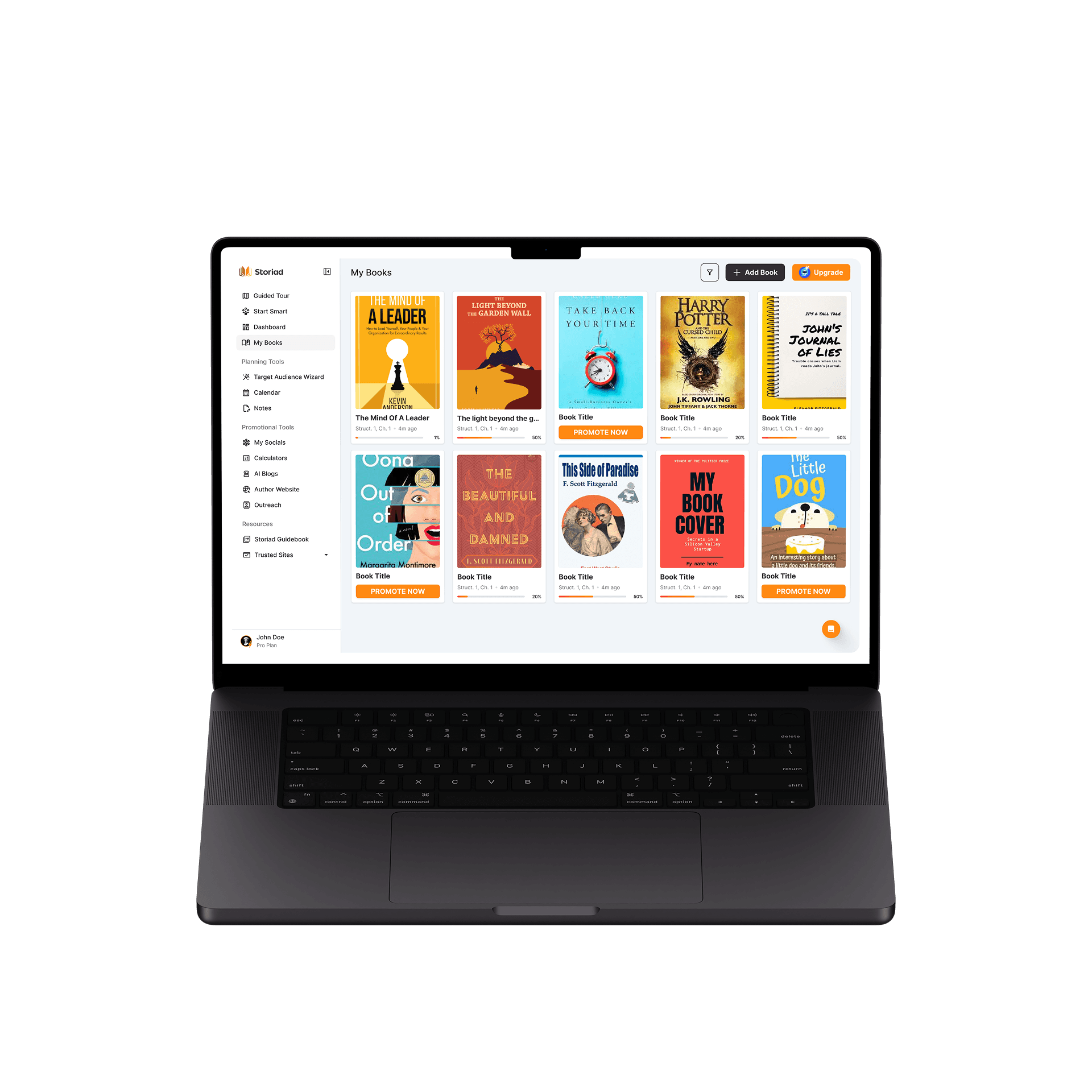
the problem
storiad is a marketing platform for authors: book promotion tools, campaign management, press kit generation, media contact lists. the product was genuinely useful. the team had been building features for years and had paying customers.
but the UX had accumulated debt. features were added without a coherent system. the navigation had grown to accommodate everything. new users were confused. power users had workarounds for workflows that should have been simple.
the founder came to us not for a rebrand, but for a clear-headed redesign that would make the product feel as good as it actually was.
the audit
we started the sprint with a UX audit rather than fresh discovery. storiad was a live product with real users, so the work was forensic rather than exploratory.
we conducted:
- a heuristic evaluation of the full product against Nielsen's 10 usability principles
- session recording review (12 user sessions) to find where users were hesitating or abandoning flows
- a feature inventory to identify orphaned functionality and redundant paths
- stakeholder interviews with the product team to understand what was planned versus what was proven
the audit surfaced a consistent pattern: users were losing context. they would start a campaign, navigate to a contacts list to find a media contact, and lose track of where they were in the campaign flow. the product needed stronger spatial orientation.
what we redesigned
the redesign touched three areas.
navigation and wayfinding. we collapsed the top-level navigation from 9 items to 4. everything else moved into contextual menus within each section. we added a persistent breadcrumb system and a recent activity strip so users could always orient themselves.
the campaign builder. the original builder was a multi-page form that lost state on navigation. we redesigned it as a persistent side-panel workflow with real-time preview. users could now build a campaign while seeing how it would look to a media contact.
the press kit generator. the most-used feature in the product, and the one with the most friction. we redesigned it as a guided step flow with a live preview that updated as authors filled in their information.
the design system
because storiad's team was building in-house, a working design system was as important as the redesigned screens. we delivered:
- a component library in Figma covering 60+ components across 4 states each
- a spacing and grid system documented with usage rules
- a color system with semantic naming (not just hex values)
- a typography scale with defined use cases for each level
- a patterns library covering common flows like empty states, loading, and error handling
60+
components built
9 to 4
nav items reduced
30
days sprint
outcome
the redesigned product shipped in phases over 3 months. the navigation change alone reduced the average time to complete a campaign by 34% according to storiad's internal metrics.
the design system has since been used to ship 4 new features without any design consultation, which was the goal from day one.