
the problem
Lebanon's cinema scene had no single source of truth. showtimes were scattered across theater websites (some outdated), social media posts, and word of mouth. if you wanted to know what was playing tonight, you had to check 4 or 5 different sources and hope the information was current.
for a country where cinema is a core social activity, the experience of finding a movie was surprisingly broken.
moviegoers' founders saw the gap clearly: build one platform that owns the Lebanese cinema experience end to end, from "what should we watch?" to "we're in our seats."
two apps, one ecosystem
the project was scoped as two distinct products that share a single identity.
moviegoers showtimes
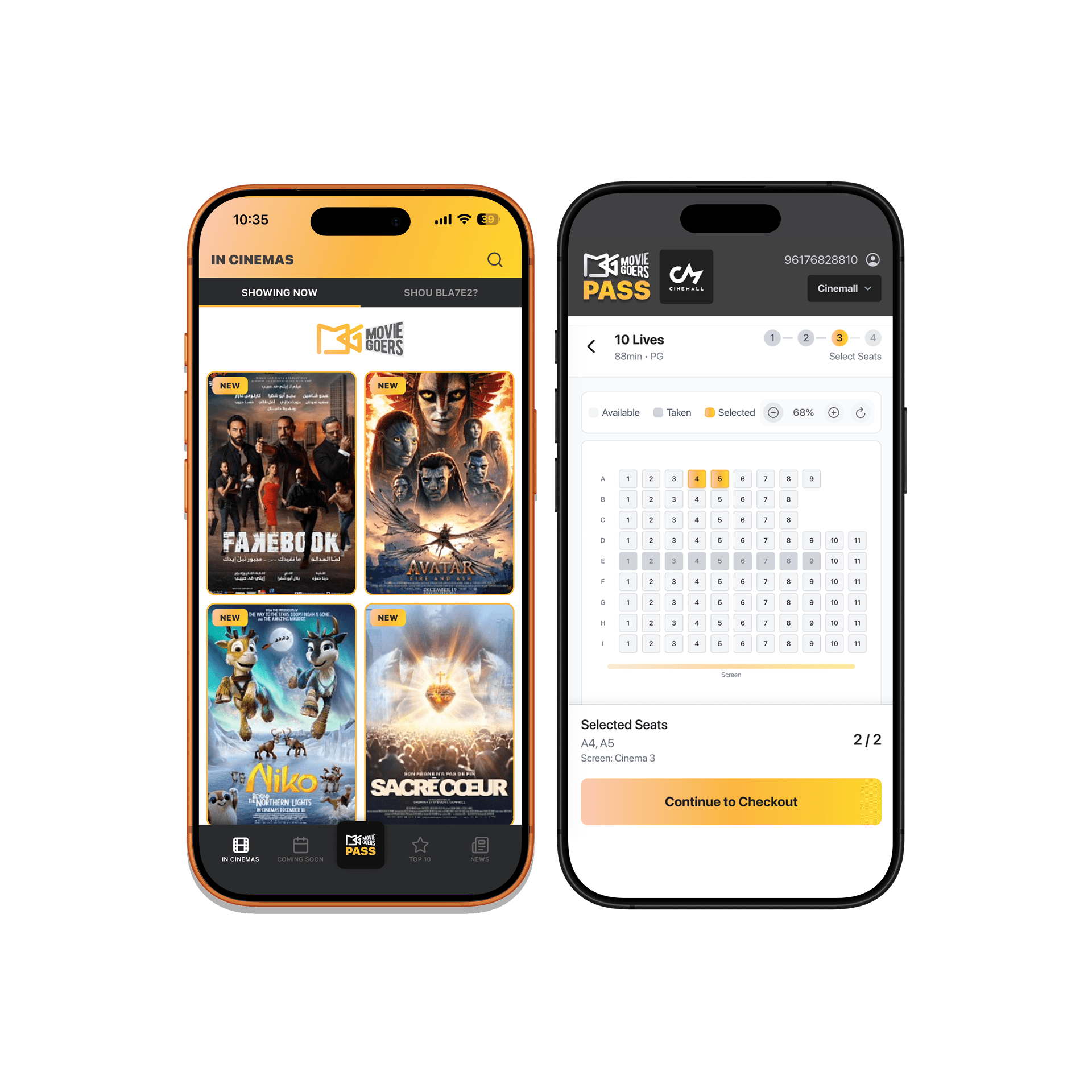
the core discovery platform. a mobile app designed to centralize the entire Lebanese cinematic landscape into one reliable, real-time source. available now on iOS and Android.
the key design challenges:
- information density. users need to scan dozens of movies and showtimes quickly. the UI had to be data-rich without feeling cluttered.
- multiple entry points. some users start with "what's playing near me?" others start with "when is this specific movie showing?" the architecture had to serve both.
- theater-level detail. each cinema has different pricing, amenities, and screen formats. this information needed to surface without overwhelming the primary flow.
we designed the showtimes app around a three-tab structure: movies, theaters, and a personalized feed. the movie detail page was the single most iterated screen in the sprint. it went through 6 versions before we landed on a layout that balanced the poster, synopsis, ratings, and showtime grid without scrolling.
the biggest design decision was treating the showtime grid as the primary interaction, not the movie detail. users come to the app to decide when and where, not what. the "what" is usually already decided before they open the app.
moviegoers pass
once showtimes was defined, the next layer was obvious: let users buy tickets directly. but the founders didn't want to just bolt on a checkout flow. they wanted a complete digital wallet ecosystem. moviegoers pass is now live.
pass includes:
- seat selection with real-time availability synced per theater
- a digital wallet that holds credits, gift cards, and loyalty points
- group booking so one person can buy for a group and share tickets via the app
- QR-based entry replacing printed tickets entirely
the design challenge here was trust. Lebanese users are still cautious about digital payments, especially for entertainment. the payment flow needed to feel secure without adding friction. we designed a three-step checkout (select seats, confirm, pay) with a persistent order summary that never hides the total.
discovery week
the sprint discovery surfaced two insights that shaped both products:
insight 1: the social layer matters. going to the movies in Lebanon is almost never a solo activity. the app needed to support group decision-making. we added a "share showtime" flow that lets a user send a specific movie + time + theater combo to a WhatsApp group with one tap.
insight 2: theater loyalty is real. lebanese moviegoers have strong opinions about which theater they prefer. the app couldn't be neutral. it needed to let users set a favorite theater and get personalized recommendations from there.
the visual system
moviegoers needed to feel premium but warm. the cinema world lives in dark mode naturally, so the aesthetic aligned perfectly with a dark-first design.
we built the system around:
- a deep charcoal base with golden accent (
#F9B641) pulled from the brand - oversized movie poster cards with a subtle parallax scroll effect
- a type scale optimized for scanning lists quickly on mobile
- a glassmorphism treatment on the ticket and wallet cards
2
apps designed
45+
screens total
30
days sprint
the handoff
the sprint delivered a fully interactive Figma prototype covering both apps. the showtimes flow (browse, filter, select, share) and the pass flow (select seats, wallet, payment, QR ticket) were connected into a single prototype that the development team could walk through end to end.
the developer handoff kit included component specs for the shared design system, the full icon set, and a written document covering every edge case: empty states, loading states, error states, and the offline fallback behavior for when connectivity is spotty in theaters.
the outcome
moviegoers launched showtimes first to build the user base, with pass rolling out 3 months later. the sequential launch was a deliberate strategy we recommended during the sprint: prove the discovery value before asking users to trust the platform with payments.
the app became the go-to cinema companion in Lebanon within its first quarter. showtimes is available on iOS and Android.