
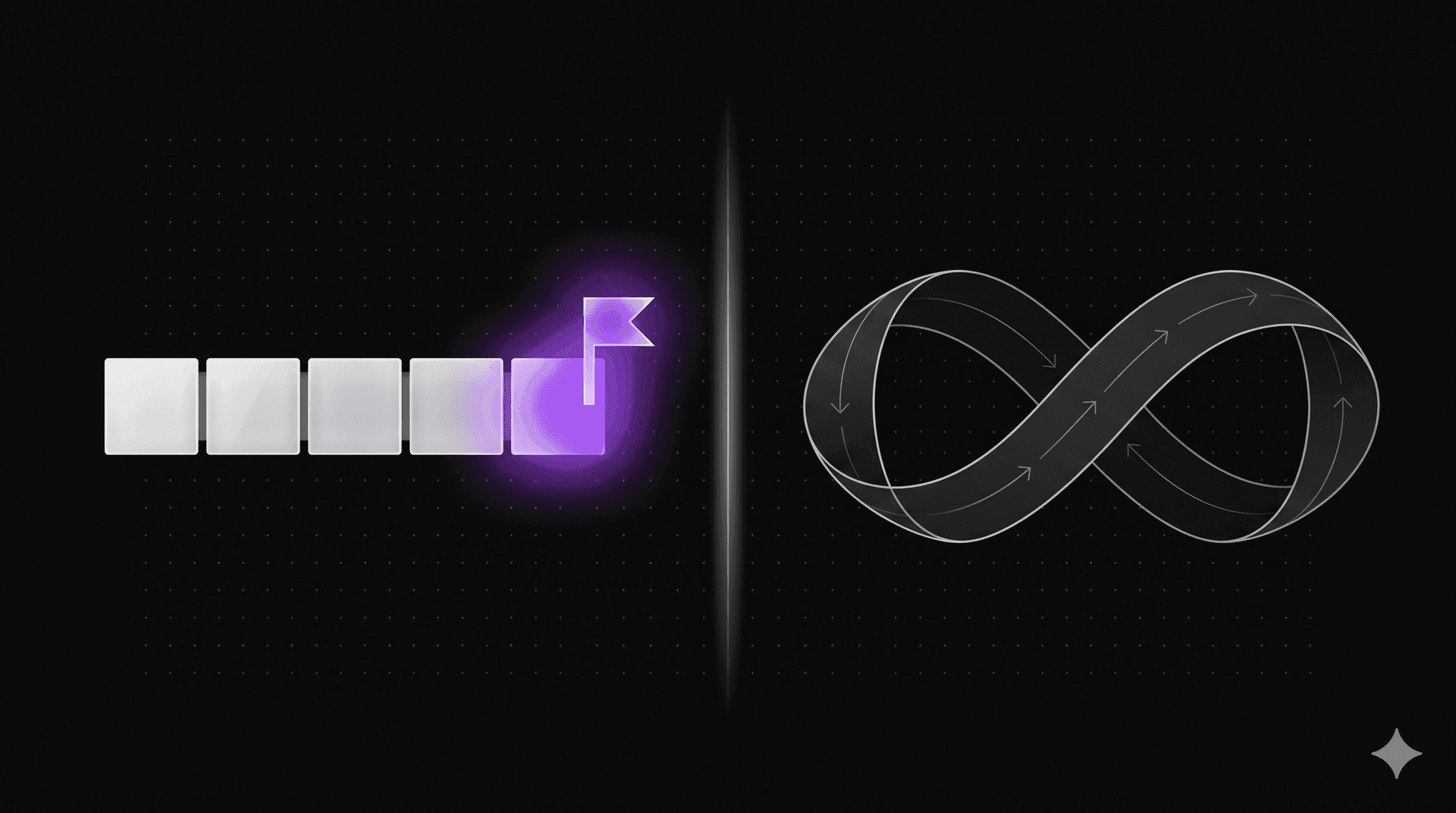
two different jobs
a sprint and a retainer solve two different problems.
a sprint answers a specific question, fast. "what should this product be?" "how do we redesign the onboarding flow?" "what is the brand identity?" you scope it once, you run it once, you get an artefact at the end. the question is closed.
a retainer keeps something alive. a product evolving. a marketing site changing every month. a/b tests running. social assets shipping. the work is open-ended.
founders pick the wrong one because the language is overlapping. they hear "ux design" and assume one shape of engagement. but you cannot run discovery on a retainer, and you cannot keep a live product on a sprint.
ask yourself: am i closing a question, or am i keeping something alive? sprint closes. retainer keeps.
what a sprint actually produces
a maxiphy ui/ux sprint is 30 working days. fixed scope: discover, define, design, prototype, hand off.
what you get:
- a validated user journey
- a clickable, high-fidelity figma prototype
- a developer handoff kit
- a moodboard, design system tokens, components
- a final review document
what you do not get:
- an ongoing relationship after day 30
- changes after the prototype is delivered (those are scoped separately)
- support for marketing collateral, social, email, banner ads
- a/b testing or analytics ongoing
a sprint is a one-time artefact. it answers a question. that is its strength. it is not built to support a live product across multiple months.
what a retainer actually produces
a maxiphy monthly design retainer (basic, standard, or premium tiers) is a recurring engagement. no fixed scope per month — instead, a fixed number of senior design hours per month allocated to whatever you need.
what you get:
- continuous design output
- a single point of contact
- a backlog you can prioritise weekly
- consistency across every artefact you ship
- predictable monthly cost
what a retainer is good for:
- a live product evolving every release
- a brand running multi-channel marketing
- a/b testing with frequent design iterations
- post-launch ux fixes and feature additions
- a founder who needs design judgement available, not a project
the ratio that tells you which one
ask yourself: in the next 90 days, how many design questions will i have?
- one big question (a product to design, a brand to create, a flow to fix) → sprint
- many small questions, week after week → retainer
most early-stage startups need a sprint first, then a retainer once the product is live. most enterprises modernising a product need a sprint to define the work, then their internal team takes the retainer role.
the worst sequence is paying for a retainer before you know what to build. you will burn three months of senior design hours producing fragments that do not add up to a product. the worst version of a sprint is hiring one when the product is already live and the real problem is "we need someone to keep up." you cannot keep up on a 30-day engagement.
the cost shape
a sprint is one fixed price. predictable, finite. you sign once, you pay once (or in two milestones), the engagement ends on a calendar date.
a retainer is a recurring monthly cost. predictable per month, indefinite per total. you can pause it, scale it up or down by tier, and end it on a notice period.
| sprint | retainer | |
|---|---|---|
| duration | 30 working days | monthly, ongoing (3 month minimum) |
| scope | fixed | flexible inside an hour budget |
| outcome | artefact | continuity |
| cost shape | one fee | recurring monthly fee |
| best for | new product, redesign, rebrand | live product, marketing org, post-launch |
| worst for | live product needs, marketing-heavy work | undefined "we need design" |
the answer for most readers
if your product is not live yet: sprint first. design the thing properly. ship it. then move to a retainer if you need ongoing iteration.
if your product is live and you have one specific design problem: sprint. scope the problem, fix it, move on. don't put a chronic design need on top of an acute problem.
if your product is live and you have ongoing design needs across multiple workstreams: retainer. but only after you have done one of two things — completed a sprint that defined the design system, or have an internal designer who already knows the system inside out.
what we recommend at maxiphy
most engagements with us start as a sprint. about a third of clients move to a retainer after the sprint ends, once the product is live and the iteration cadence is real.
we do not sell retainers to clients who have not done discovery work first, because every time we have, the retainer underperforms. design hours without a clear definition of the product produce decoration, not progress.
if you want to talk through which one fits your situation, book a free discovery call. 30 minutes, no pitch. if a sprint fits, we will say so. if a retainer fits, we will say so. if neither fits and you need a freelancer or an in-house hire, we will say that too.